
What Is Craftsmanship and Why It Matters at Home
Finding home decor gifts that truly connect with family can feel impossible in a world flooded with mass-produced options. About 80 percent of people say handmade gifts create stronger emotional bonds compared to store-bought items. This is why so many families across the United States are drawn to American craftsmanship. When you choose American-made pieces, you celebrate tradition, support skilled artisans, and bring real meaning into your home.
Table of Contents
- Defining Craftsmanship In Everyday Life
- Types Of Craftsmanship In Home Decor
- Essential Skills And Hallmarks Of Quality
- How Craftsmanship Adds Meaning And Value
- Avoiding Common Pitfalls In Personalized Decor
Key Takeaways
| Point | Details |
|---|---|
| Craftsmanship Encompasses Artistry | Craftsmanship transforms everyday items into expressions of creativity by blending traditional skills with modern innovation. |
| Cultural Significance | Handcrafted products convey cultural heritage and personal narratives that mass-produced items cannot replicate. |
| Skills Beyond Technique | Master artisans possess a combination of material knowledge, precision, and innovative creativity that elevate their work. |
| Personalized Decor Challenges | Effective personalization requires thoughtful decision-making, ensuring choices reflect genuine identity and cohesive design. |
Defining Craftsmanship in Everyday Life
Craftsmanship represents a profound commitment to skill, precision, and deep understanding that transforms ordinary objects into extraordinary expressions of human creativity. At its core, craftsmanship goes beyond mere manufacturing - it embodies a cultural heritage of skill mastery that connects artisans with generations of traditional knowledge and innovative techniques.
Traditional craftsmanship involves intricate skills passed down through generations, creating objects that are not just functional but also carry profound cultural significance. These crafted items - whether delicate jewelry, robust household tools, or intricate decorative pieces - reflect the artisan’s dedication to quality, attention to detail, and personal investment in their work. The craftsmanship spirit represents more than technical expertise; it symbolizes a mental approach that prioritizes innovation, continuous improvement, and deep personal connection to the creative process.
In modern contexts, craftsmanship has evolved to balance traditional techniques with contemporary innovation. Skilled talents increasingly focus on innovation and mastery that distinguish their work from mass-produced alternatives. This approach involves not just technical skill but a holistic commitment to excellence that transforms ordinary production into an art form. Craftspeople today navigate challenges like mass production and changing consumer preferences while maintaining the essence of their traditional craft.
Pro tip: Start appreciating craftsmanship by observing the details in handmade items around your home, noticing the unique characteristics that distinguish them from machine-made products.
Here’s a comparison of traditional versus contemporary craftsmanship approaches:
| Aspect | Traditional Craftsmanship | Contemporary Craftsmanship |
|---|---|---|
| Techniques | Manual, inherited skills | Mix of manual and new methods |
| Cultural Influence | Deeply tied to heritage | Often blends global cultures |
| End Product Style | Classic, unique imperfections | Innovative, often modern |
| Consumer Appeal | Collectors, cultural value | Broader, trend-focused buyers |
Types of Craftsmanship in Home Decor
Craftsmanship in home decor spans a rich spectrum of artistic expressions that transform living spaces into personalized narratives. Traditional craftsmanship techniques encompass diverse artisanal practices that bring unique character and cultural depth to interior design. From intricate woodworking to delicate textile arts, each craft represents a nuanced approach to creating meaningful home environments.
Woodworking stands as a cornerstone of home decor craftsmanship, involving the meticulous creation of furniture, decorative objects, and architectural elements. Skilled woodworkers transform raw timber into elegant tables, custom shelving, intricate carved details, and functional pieces that blend aesthetic beauty with structural integrity. Similarly, textile crafts like weaving, embroidery, and quilting introduce texture, color, and personal storytelling through handmade rugs, throw pillows, wall hangings, and custom upholstery.

Contemporary home decor craftsmanship also embraces innovative artisanal design approaches that integrate traditional skills with modern aesthetic sensibilities. Ceramic artists create custom pottery, sculptural pieces, and decorative tiles that add unique focal points to interior spaces. Metal craftsmen design intricate lighting fixtures, decorative wall art, and custom hardware that elevate ordinary home elements into extraordinary design statements. These crafted pieces not only enhance visual appeal but also communicate personal stories and cultural connections.
Pro tip: When selecting crafted home decor, look for pieces that showcase visible handwork, unique imperfections, and materials that reflect authentic artisanal techniques.
Essential Skills and Hallmarks of Quality
True craftsmanship demands a comprehensive set of skills that go far beyond simple technical proficiency. Essential craftsmanship skills represent a nuanced combination of knowledge, creativity, and dedicated practice that transforms ordinary work into exceptional artistry. At its core, craftsmanship requires a deep understanding of materials, precise manual techniques, and an unwavering commitment to excellence.
The hallmarks of quality craftsmanship are multifaceted, encompassing both tangible and intangible elements. Technical competence stands as the foundation, involving mastery of tools, understanding material properties, and executing techniques with consistent precision. However, true mastery extends beyond mechanical skill. Artisan creativity and innovation play crucial roles, allowing craftspeople to push beyond traditional boundaries, reimagine techniques, and develop unique personal approaches that distinguish their work.
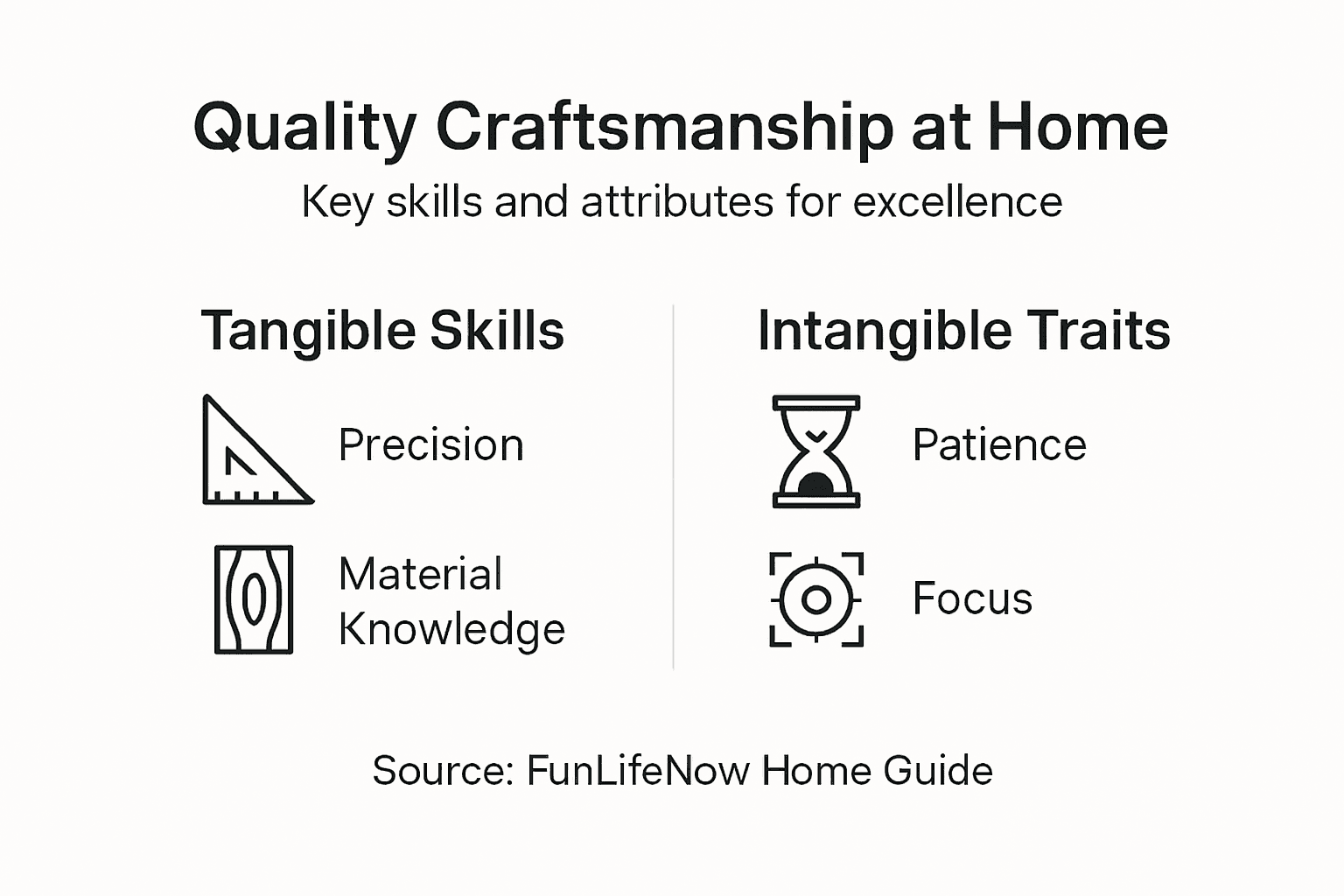
Mental attributes are equally important in defining exceptional craftsmanship. Sustained focus, patience, and a profound sense of pride in one’s work characterize master artisans. These professionals maintain an ongoing dialogue between intellectual understanding and physical execution, constantly refining their skills and challenging themselves to achieve higher levels of performance. The craftsman’s mindset involves continuous learning, embracing both traditional knowledge and contemporary innovations, and developing a holistic approach that honors both technique and creative expression.
Pro tip: Develop your appreciation for craftsmanship by closely examining handmade objects, noting the subtle details that reveal the artisan’s skill and personal touch.
Below is a summary of key skills and characteristics found in master artisans:
| Skill/Attribute | Description | Impact on Quality |
|---|---|---|
| Material Knowledge | Deep understanding of resources | Enables lasting durability |
| Precision Techniques | Accurate, consistent manual execution | Results in flawless details |
| Innovative Creativity | Ability to rethink techniques | Produces unique works |
| Focus & Patience | Sustained attention to craft | Ensures high standards |
How Craftsmanship Adds Meaning and Value
Craftsmanship transcends mere functionality, transforming ordinary home spaces into deeply personal narratives that reflect individual identity and cultural heritage. Consumer connections with handmade products reveal a profound emotional dimension that mass-produced items simply cannot replicate. Each handcrafted piece tells a story, carrying within its texture and design the artisan’s skill, cultural background, and unique creative vision.
Beyond aesthetic appeal, craftsmanship adds substantial value by preserving and celebrating cultural traditions. Artisan skills and cultural heritage represent more than technical expertise; they are living connections to community histories, regional identities, and generational knowledge. When individuals choose handcrafted home decor, they are not just purchasing an object, but participating in a broader narrative of human creativity, supporting local economies, and maintaining important cultural practices.
The intrinsic value of craftsmanship lies in its ability to create authentic, meaningful connections between people and their living spaces. Handcrafted items possess unique characteristics - subtle irregularities, personal touches, and intricate details - that reflect human creativity and skill. These objects become more than mere decorations; they are tangible expressions of individual taste, cultural background, and artistic appreciation. By choosing crafted pieces, homeowners curate spaces that feel deeply personal, telling stories that resonate far beyond simple visual appeal.
Pro tip: Invest in crafted home decor pieces from local artisans, asking about their creative process and the story behind each item to deepen your appreciation and connection.
Avoiding Common Pitfalls in Personalized Decor
Personalizing home decor requires careful navigation to ensure meaningful and authentic design choices. Common design personalization challenges reveal that individuals often rush into decisions without thorough exploration, leading to spaces that feel forced or disconnected from their true personal aesthetic. Successful personalization demands thoughtful consideration, creativity, and a willingness to explore multiple design perspectives before committing to a final concept.
One significant pitfall involves becoming overly attached to initial design concepts without critically evaluating their long-term suitability. Homeowners frequently select items based on immediate emotional appeal, overlooking critical factors like functionality, existing room dynamics, and overall design harmony. Personalized design strategies emphasize the importance of creating spaces that are not just visually appealing, but also authentically reflective of individual experiences, lifestyle needs, and personal narratives.
Avoiding personalization mistakes requires a balanced approach that combines emotional resonance with strategic design thinking. This means resisting impulse purchases, carefully curating pieces that genuinely speak to personal identity, and creating spaces that evolve organically over time. Successful personalized decor tells a story - your story - through carefully selected pieces that have meaningful connections, complementary aesthetics, and a sense of intentional curation that transcends trends and mass-produced design solutions.
Pro tip: Create a mood board or digital inspiration collection before making decor purchases, allowing you to visualize how different pieces will interact and ensuring a cohesive, personalized design approach.
Elevate Your Home with Meaningful Craftsmanship
The article highlights the challenge of finding home decor that truly reflects craftsmanship and personal storytelling rather than mass-produced pieces. Many people strive to add authentic, handcrafted items that bring emotional value and lasting quality to their living spaces. If you want to avoid common pitfalls of impersonal decor and embrace the spirit of traditional and contemporary craftsmanship, focusing on unique, handcrafted artistry is key.
At FunLifeNow, we understand the importance of blending skilled craftsmanship with personalized design to create home accents that tell your unique story. Our American-made, custom products such as blankets, canvas wall art, and metal signs are designed to showcase visible handwork and creative details that resonate with your heritage and style. We make it simple to add names, dates, and personal messages so you can curate a home environment that feels truly yours.
Discover how you can enrich your living space with craftsmanship that matters today.

Start your journey toward authentic personalization at FunLifeNow. Explore our exclusive collections and experience the quality and emotional connection that handcrafted decor brings. Visit customizable home decor and see how storytelling through craftsmanship can make your house a home.
Frequently Asked Questions
What is craftsmanship?
Craftsmanship refers to the skill and dedication that artisans apply to create high-quality, unique items. It combines traditional techniques with personal creativity, resulting in products that often carry cultural significance and a story behind their creation.
How does craftsmanship add value to home decor?
Craftsmanship enhances home decor by providing unique, handcrafted pieces that reflect individual identity and cultural heritage. These items possess character, showcasing the artisan’s skill and creativity, which helps to create a more meaningful living space compared to mass-produced alternatives.
What are the essential skills needed for quality craftsmanship?
Essential skills for quality craftsmanship include in-depth material knowledge, precision in techniques, and innovative creativity. Craftspersons also need focus and patience, allowing them to produce high-quality, durable items with unique characteristics.
What are common pitfalls when personalizing home decor?
Common pitfalls in personalizing home decor include rushing into decisions based on emotional appeal without considering long-term suitability, functionality, and design harmony. It’s essential to thoughtfully curate pieces that genuinely reflect personal identity and style to create cohesive and meaningful spaces.
Recommended
- Importance of Craftsmanship in Personal Decor – FunLifeNow
- Importance of Craftsmanship in Personal Decor – FunLifeNow
- Why Home Decor Matters: Complete Guide to Meaningful Spaces – FunLifeNow
- Why Home Decor Matters: Complete Guide to Meaningful Spaces – FunLifeNow
- Top Personalized Robes – Expert Comparison 2025 – Lotus Linen